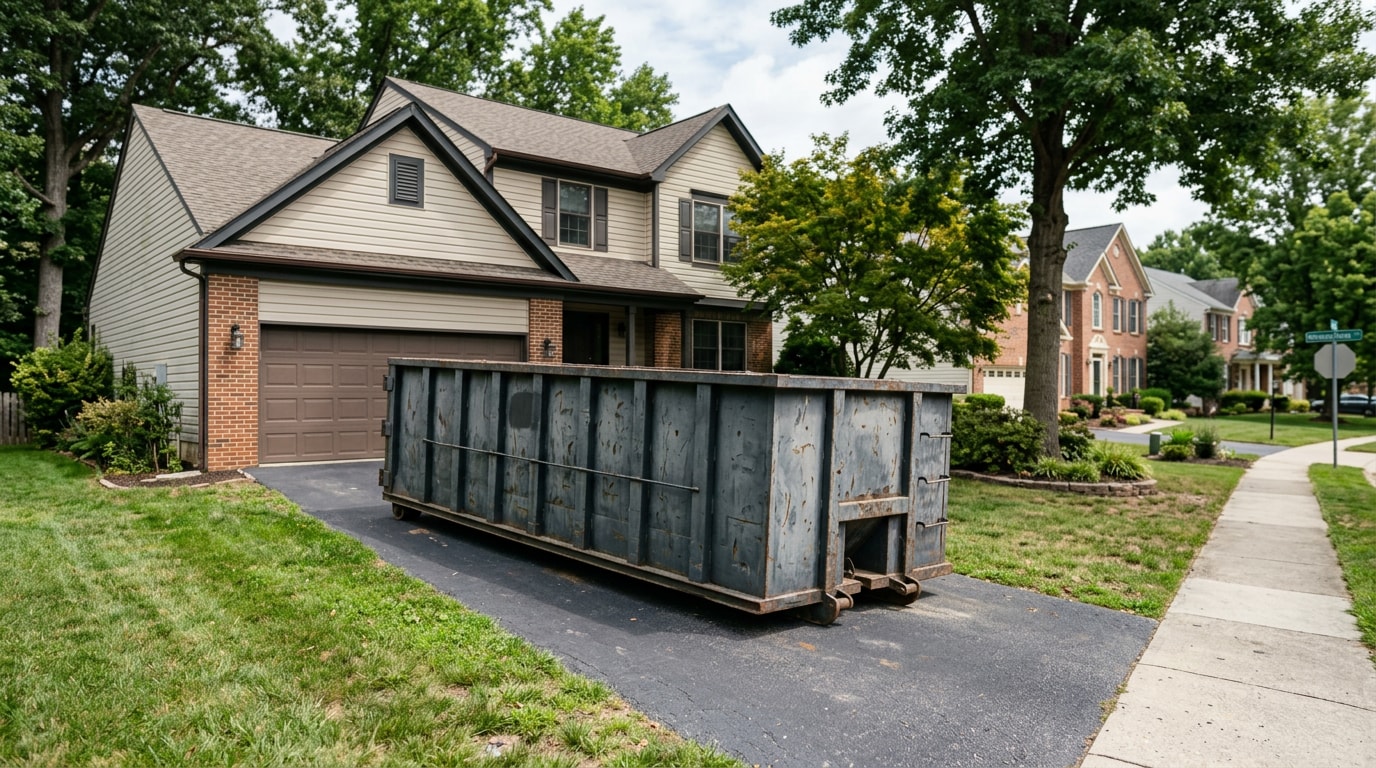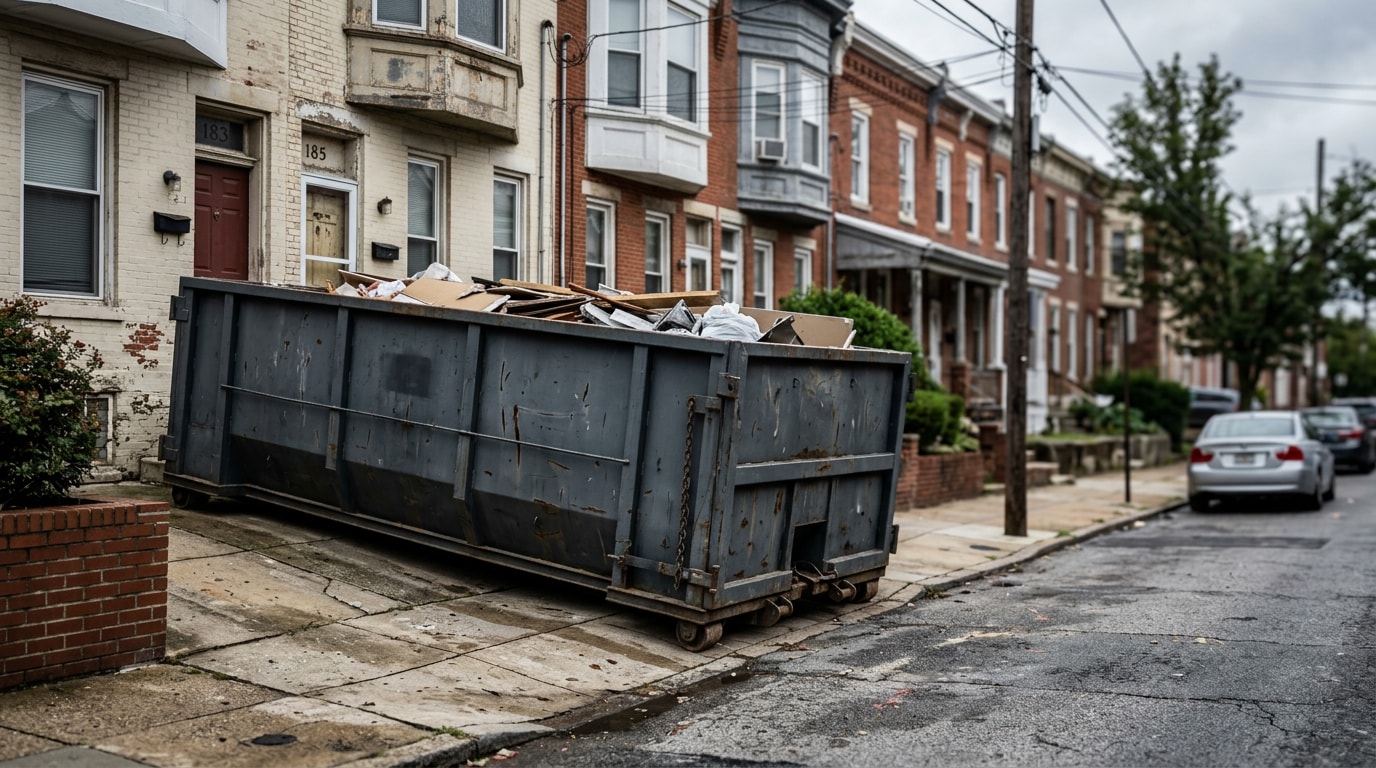
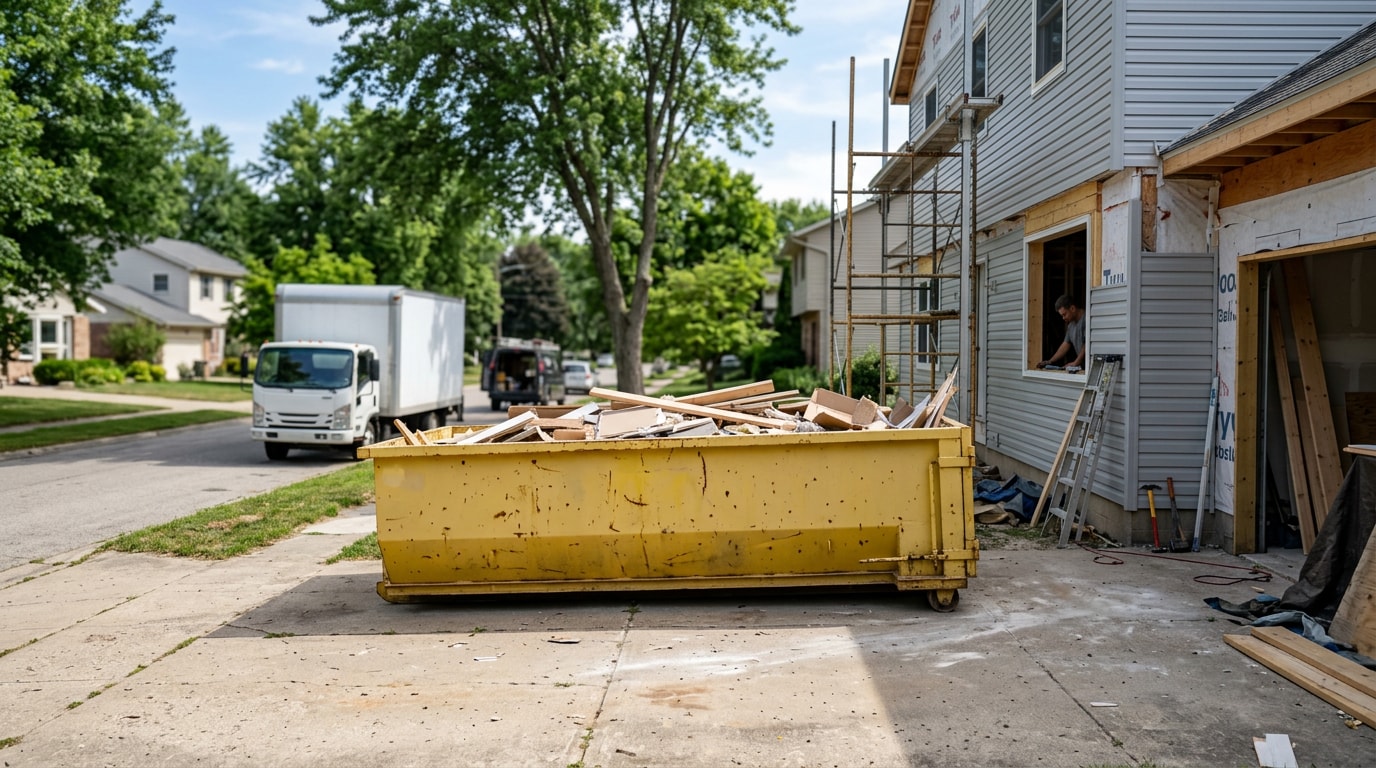
A contractor dumpster in Anne Arundel County, MD is the roll-off container crews use to keep jobsite debris contained on renovations, roofing tear-offs, and new builds. These containers are built for lumber, drywall, shingles, and packaging piling up across a multi-week project, not a few bags of yard waste. Here's how to size one correctly, what the delivery and permit process looks like locally, and what's actually allowed inside.
Contractor Dumpster Sizes for Anne Arundel County Jobsites
Picking the right size comes down to debris volume and weight, not project square footage. A single-room remodel generates a fraction of the material a whole-house gut job does, and dense debris like shingles or concrete fills a container faster than framing scraps.
| Size | Typical Use | Approx. Pickup-Truck Loads |
|---|---|---|
| 10 yard | Small remodel, single-room renovation, deck tear-off | 3-4 |
| 15-20 yard | Kitchen or multi-room renovation, roofing job | 6-8 |
| 30 yard | Whole-house demolition, major addition | 10-13 |
| 40 yard | Large commercial build-out, full structural demo | 14-16 |
An undersized container means a second pull mid-project. An overloaded one risks rejected pickup or overage fees, since a box filled above the rim can't legally be tarped or hauled. Talking through debris type and volume with the rental provider before booking avoids both problems, and the Residential Dumpster Rental and Commercial Dumpster Rental pages break down which size fits which scope.
Matching the Dumpster to Your Project Type
Contractor dumpster needs shift with the job. A roofing tear-off produces a different debris mix than a kitchen remodel, and a commercial build-out moves at a different pace than a single-room renovation.
Construction Debris Removal
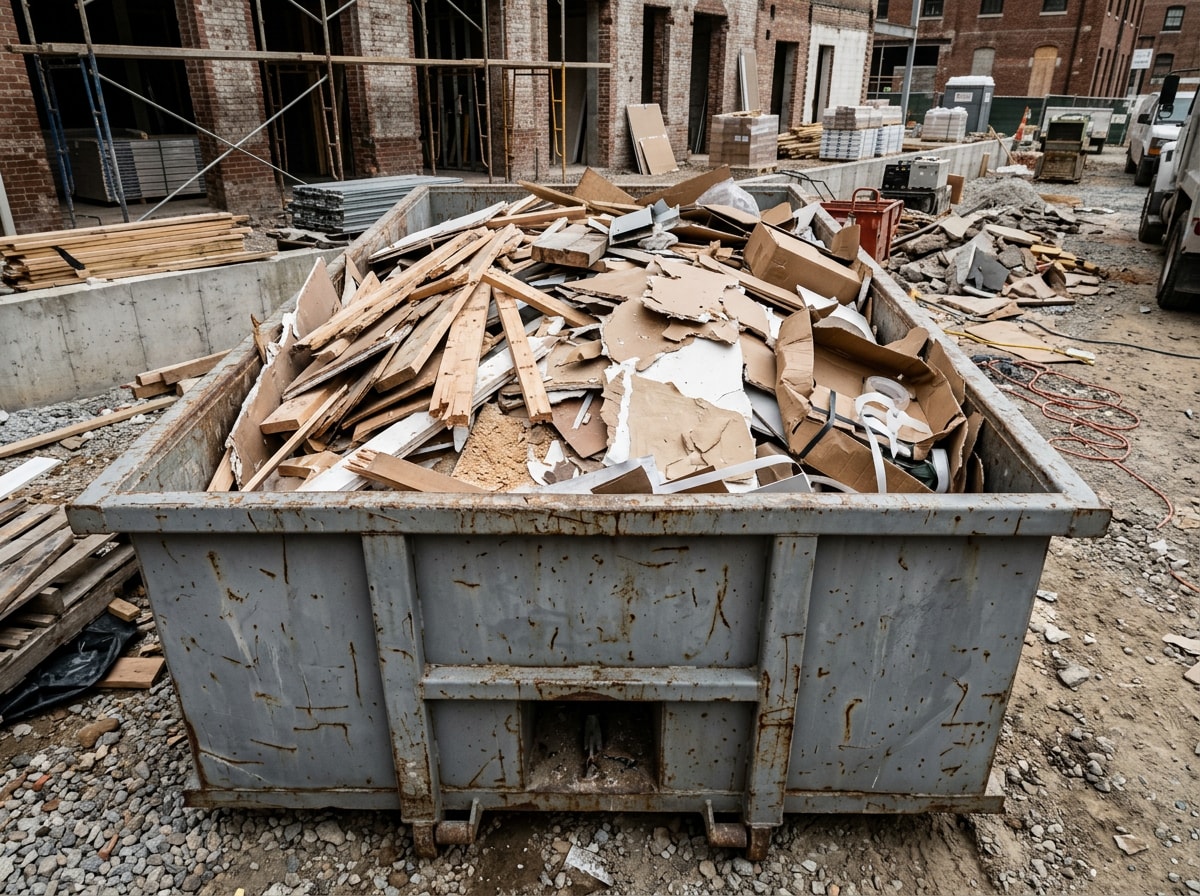
Active construction sites generate a steady stream of lumber scraps, drywall cutoffs, and packaging. Left to pile up, that debris turns a jobsite into a tripping hazard fast.
Federal jobsite safety rules back this up directly. OSHA's construction housekeeping standard requires that all other debris shall be kept cleared from work areas, passageways, and stairs, in and around buildings or other structures , and that combustible scrap and debris shall be removed at regular intervals during the course of construction . A dedicated jobsite dumpster is the easiest way crews meet that requirement without hauling material by hand between trips.
Demolition and Heavy Debris
Demolition debris behaves differently than everyday construction waste. Concrete, plaster, and old fixtures weigh far more per cubic yard than framing scraps, which changes which container size actually makes sense. Flagging a demolition job upfront, rather than after delivery, matters because overloading a standard container with dense material creates weight problems at pickup.
Home Renovation Debris
Kitchen, bathroom, and whole-floor remodels generate a specific mix: old cabinetry, flooring, tile, and outdated appliances. This debris is bulkier than household trash and doesn't fit into a standard can. A single drop point keeps the work area clear and the schedule on track throughout the project.
Commercial and Multi-Trade Projects
Larger contractor work, like tenant improvements and office renovations, produces debris at a different pace and volume than residential jobs, often with multiple trades working in parallel. These sites typically need a bigger container on-site longer. This is the exact need the Commercial Dumpster Rental service is built around.
Residential Contractor Jobs
A deck build, bathroom gut, or single-room remodel doesn't need commercial footprint, but it still generates more debris than a homeowner can manage alone, and in many cases the contractor is the one placing the order. You can review completed deliveries of this size and scope on the project gallery before booking your own.
Delivery, Placement & Permit Rules in Anne Arundel County
Placement is where contractor dumpster jobs most often run into delays, and it deserves attention before the truck shows up.
Anne Arundel County and its incorporated areas regulate anything placed in a public street, sidewalk, or right-of-way separately from private property like a driveway. The county's own guidance confirms that homeowners, utilities, and their contractors may require a right-of-way permit to undertake certain repairs and construction, and a permit is required anytime you occupy, use, or engage in any activity in a public right-of-way , which includes a container that blocks or sits on the street. Permits in the county go through the Land Use Navigator (LUN) system , and it's worth confirming requirements before delivery rather than after.
A typical delivery follows this sequence:
- Request a quote based on project type and estimated debris volume.
- Confirm placement, driveway surface, and any HOA or right-of-way rules.
- Schedule a delivery window and have the drop zone cleared.
- Load the container as work progresses, keeping debris below the rim.
- Schedule pickup once the job wraps.
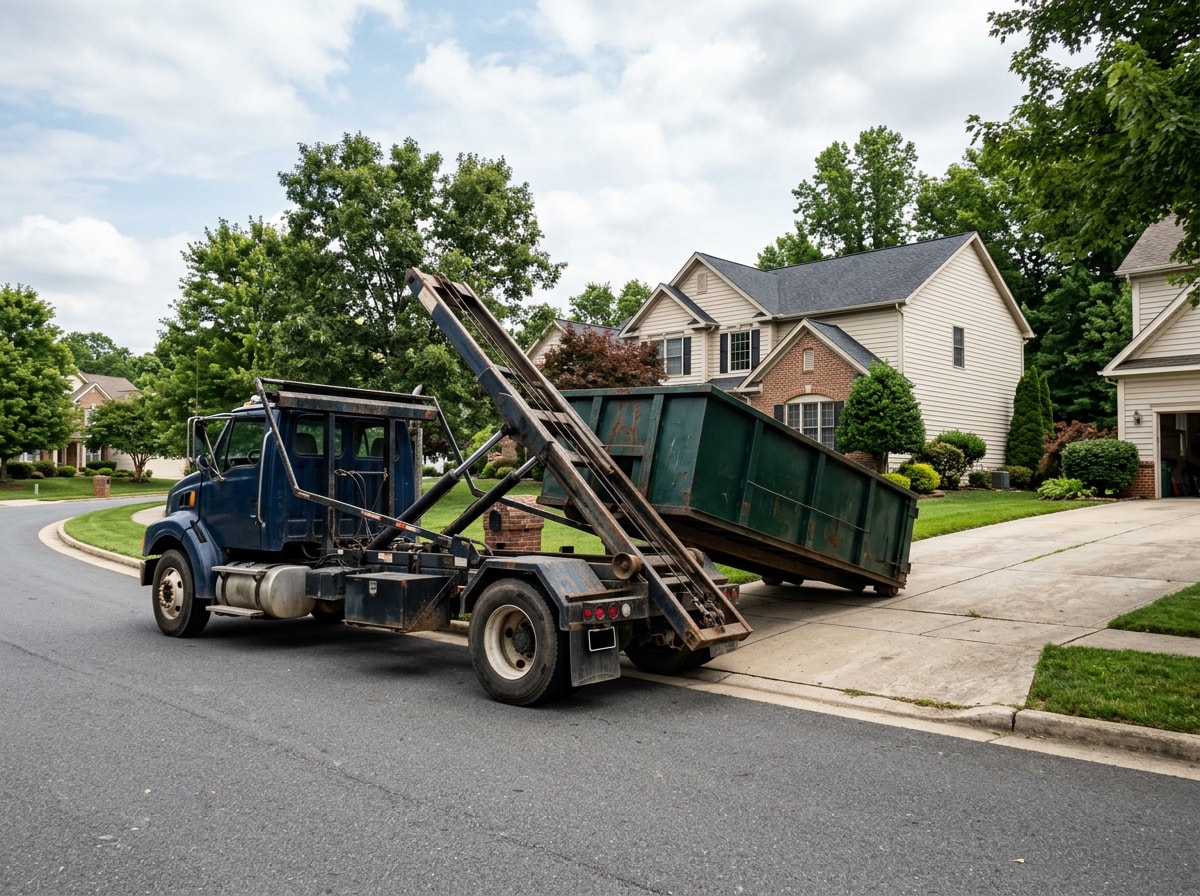
HOA communities across the county frequently add their own rules on top of county requirements, including maximum placement days and driveway surface protection. Confirming both the county's right-of-way rules and any HOA restrictions before delivery day is the single easiest way to avoid a rescheduled drop-off. Request a free estimate and we'll walk through placement details for your address before the truck is booked.
What Can and Can't Go In a Contractor Dumpster
Not all jobsite debris is treated the same way. Some materials are standard fill, others need separate handling, and a few aren't allowed at all.
Typically accepted:
- Lumber, framing scraps, and drywall
- Roofing shingles
- Flooring, tile, and cabinetry
- Non-refrigerant appliances
- General household and cleanout junk
Typically not accepted:
- Hazardous liquids and chemicals
- Tires
- Batteries
- Refrigerant-containing appliances
- Asbestos-containing material
Flagging questionable items before loading, rather than after the container is full, keeps the job compliant and avoids extra fees. For a full breakdown by material, see what can you put in a dumpster in Anne Arundel County, and the Waste Management Service page covers general acceptance guidelines across project types.
Recycling What You Can
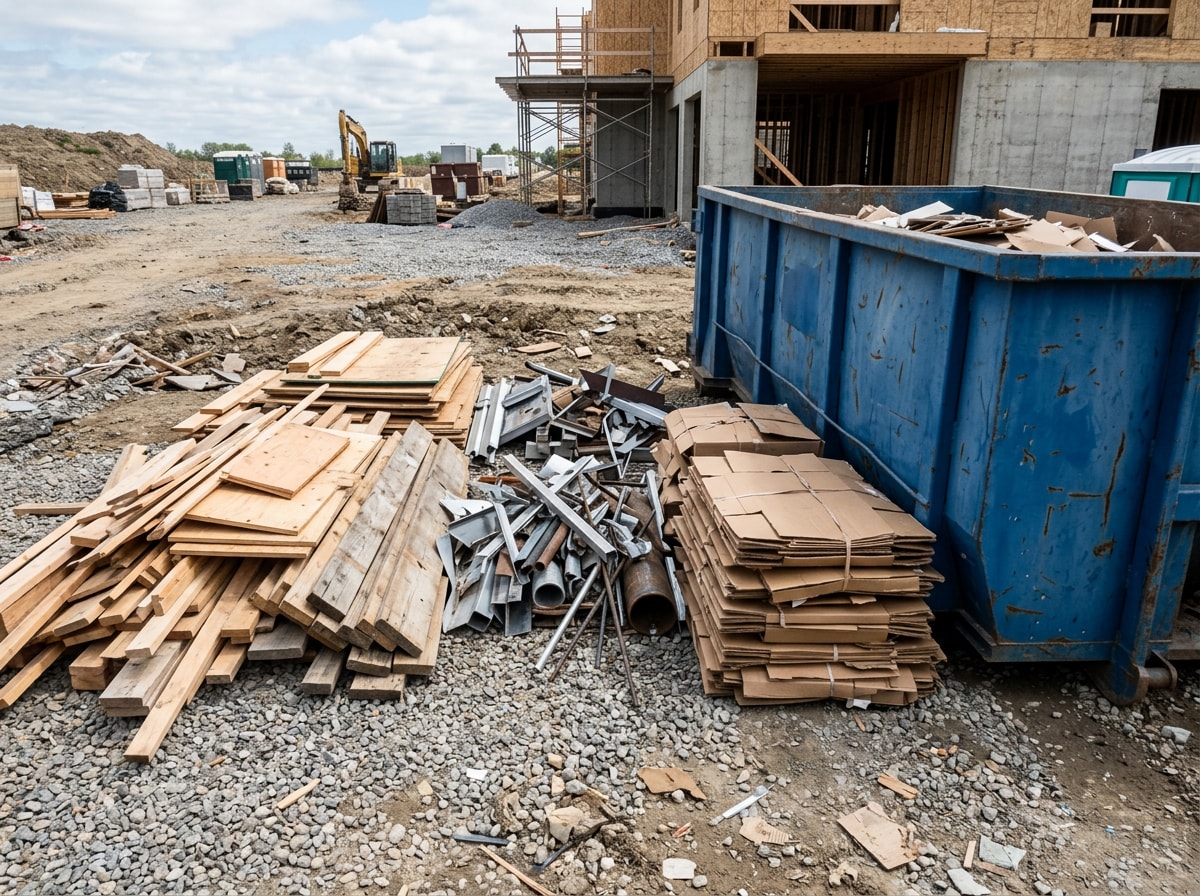
Not all construction debris has to go to a landfill. Clean wood, metal scraps, and cardboard packaging are commonly recyclable, and diverting them reduces overall disposal volume on a job. The EPA notes that construction materials recycling is often most efficient during active construction rather than demolition, since recycling is often easiest during construction projects as opposed to demolition and renovation projects, because during construction crews can source separate materials as debris is produced . Sorting clean material at the source, rather than after it's mixed in the container, is the practical version of that same principle on a residential or commercial job.
Check current size and service options on the Cathy's Cans homepage before your next delivery, or serving details for the county on the Anne Arundel County service area page.
FAQ
Do I need a permit for a contractor dumpster in Anne Arundel County?
Not if the container sits entirely on private property, like a driveway. A permit becomes necessary once any part of the dumpster sits on a public street, sidewalk, or right-of-way, which is regulated through the county's Land Use Navigator system. Confirm placement with the rental provider before delivery day if there's any chance it will touch the curb.
How quickly can a contractor dumpster be delivered in Anne Arundel County?
Delivery timing depends on container availability and when the order comes in. Calling early in the day gives the best odds for same-day or next-day delivery, though this isn't guaranteed for every size or date.
What size dumpster do I need for a renovation or construction project?
A 10-yard container typically covers a single-room remodel or small deck project. Kitchen renovations, roofing jobs, and multi-room work usually need 15-20 yards. Whole-house demolition, major additions, or heavy debris like concrete call for 30 yards or more.
What materials are not allowed in contractor dumpsters?
Most contractor dumpsters exclude hazardous waste, chemicals, tires, batteries, and refrigerant-containing appliances. Paint cans and fuel often need separate disposal too. Check the banned materials list with your rental provider before loading to avoid rejected pickup or added fees.
Can anyone dump in my contractor dumpster overnight?
Using a contractor-ordered dumpster for an active, permitted job is standard practice. The real risk is unauthorized dumping by third parties into a container that isn't theirs, which is why covering or securing a container overnight is worth doing on sites near public streets.
Will a couch fit in a 10-yard dumpster?
Generally yes. A 10-yard container can typically handle a standard couch along with other bulky items, though large sectionals or multiple furniture pieces fill the space faster than expected. If the job mixes furniture with renovation debris, sizing up is the safer call.
Is styrofoam recyclable in Anne Arundel County?
No. Anne Arundel County's curbside recycling program does not accept it, and the county is explicit that polystyrene, commonly known as Styrofoam, is not accepted for recycling . Contractors with significant styrofoam packaging waste should route it to the trash stream or a specialty drop-off rather than the recycling bin.