Most people searching for portable septic tank rental in Baltimore, MD aren't actually looking for a septic tank. They need a portable holding tank or toilet unit sized correctly for a job site, a backyard party, or a multi-day event. Get the sizing wrong and you're either paying for servicing you didn't need or calling for an emergency pump-out mid-event.
"Portable Septic Tank" vs. Portable Toilet: What You're Actually Renting
A permanent septic tank is buried, plumbed into a house, and regulated separately from anything you'd rent for a weekend. What Baltimore renters usually mean by "portable septic tank" is one of two things: a standard porta potty with a built-in waste tank, or a standalone portable holding tank that adds extra storage capacity to an existing restroom setup.
The distinction matters for compliance, too. Under Maryland's state sewage disposal regulations, a fixed holding tank installed to serve a building must hold a minimum of seven days of effluent and be built to watertight standards. A holding tank is required to hold a minimum of 7 days effluent and shall be of watertight construction. Rental holding tanks for job sites and events follow the same watertight-construction logic, just on a scale sized for shorter-term use.
This guide covers both the toilet-unit side and the holding-tank side, plus the servicing math and permit rules specific to Baltimore City.
Standard Single-Stall Units
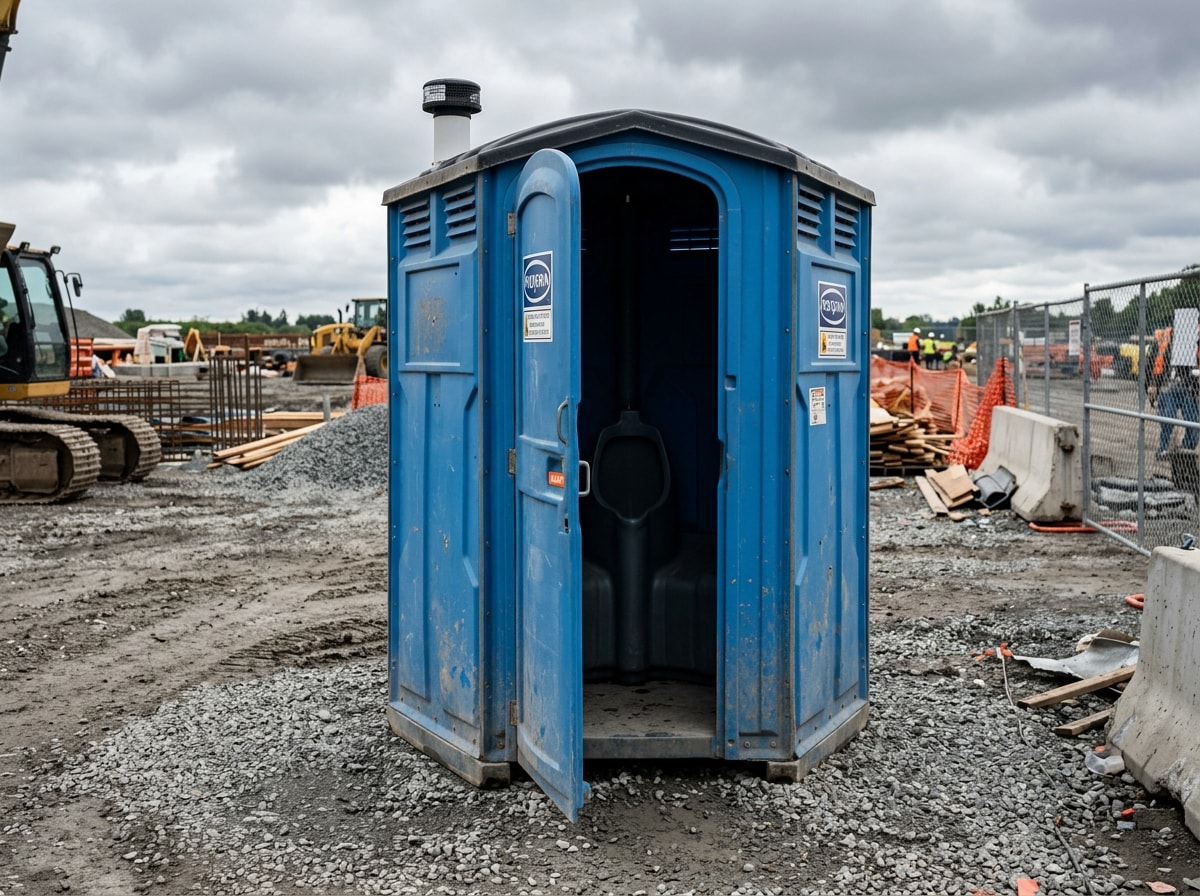
A standard portable toilet is a self-contained single-stall unit, typically 44-48 inches deep, 45 inches wide, and 88-92 inches tall, built around a 60-gallon tank. That capacity is sized for roughly 10 average daily uses per person before it needs servicing.
Standard features include:
- A molded urinal and toilet seat with lid
- An interior shelf for supplies
- A foot-pump sink or hand sanitizer dispenser
- A deodorizer system to manage odor between visits
These units are the right fit for small crews, short events, and sites without easy access for larger equipment.
Handicap-Accessible (ADA) Units
An ADA-accessible unit is wider, ground-level, and includes a ramp or flush threshold, interior turning space, and grab bars positioned for wheelchair users. This isn't a nice-to-have add-on for most jobs — it's frequently a requirement.
Accessibility compliance typically gets triggered by any event open to the public, job sites above certain worker-count thresholds, and venues receiving public funding or permits. Baltimore event organizers who skip this step risk permit delays, since many local permitting processes ask directly whether accessible facilities are included in the sanitation plan. If your event is open to the public or your crew count climbs past a handful of workers, budget for at least one accessible unit alongside standard stalls.
Handwash Stations
A handwash station rental pairs naturally with toilet units, especially for food service, healthcare-adjacent events, or any job site where hand hygiene matters. These come as foot-pump models with fresh and gray water tanks, or hands-free versions with soap and paper towel dispensers built in. For events serving food, a dedicated sanitation station separate from the restroom is often expected by health inspectors.
Restroom Trailers
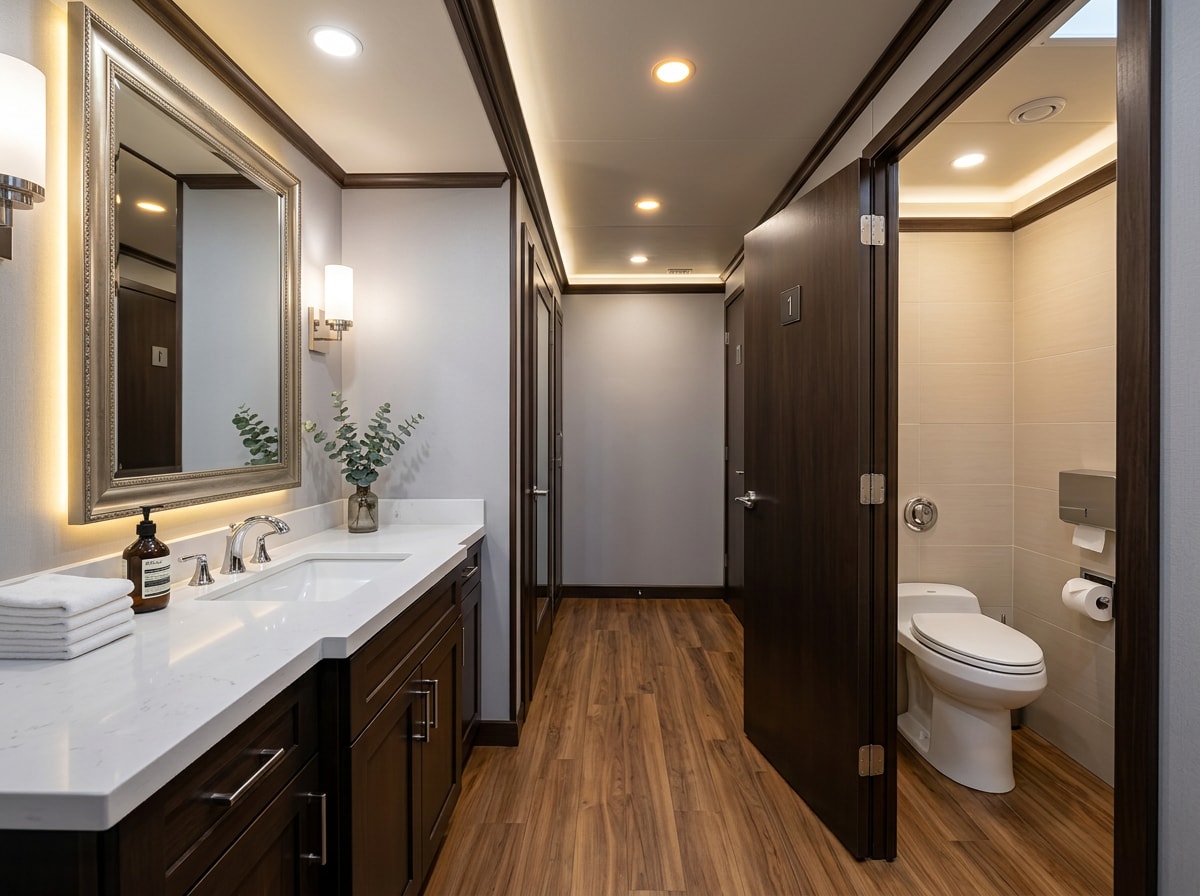
A restroom trailer steps up from a standard stall with real flushing fixtures, climate control, interior lighting, and often multiple separated stalls. Luxury models can include finished walls, vanity sinks, and sound systems, which is why they're a common choice for weddings and upscale corporate events.
A flushing trailer generally needs either a water hookup or an onboard freshwater tank, so site prep, a level pad and nearby power access, matters more here than it does for a standard unit.
Portable Holding Tanks: Sizing & Capacity
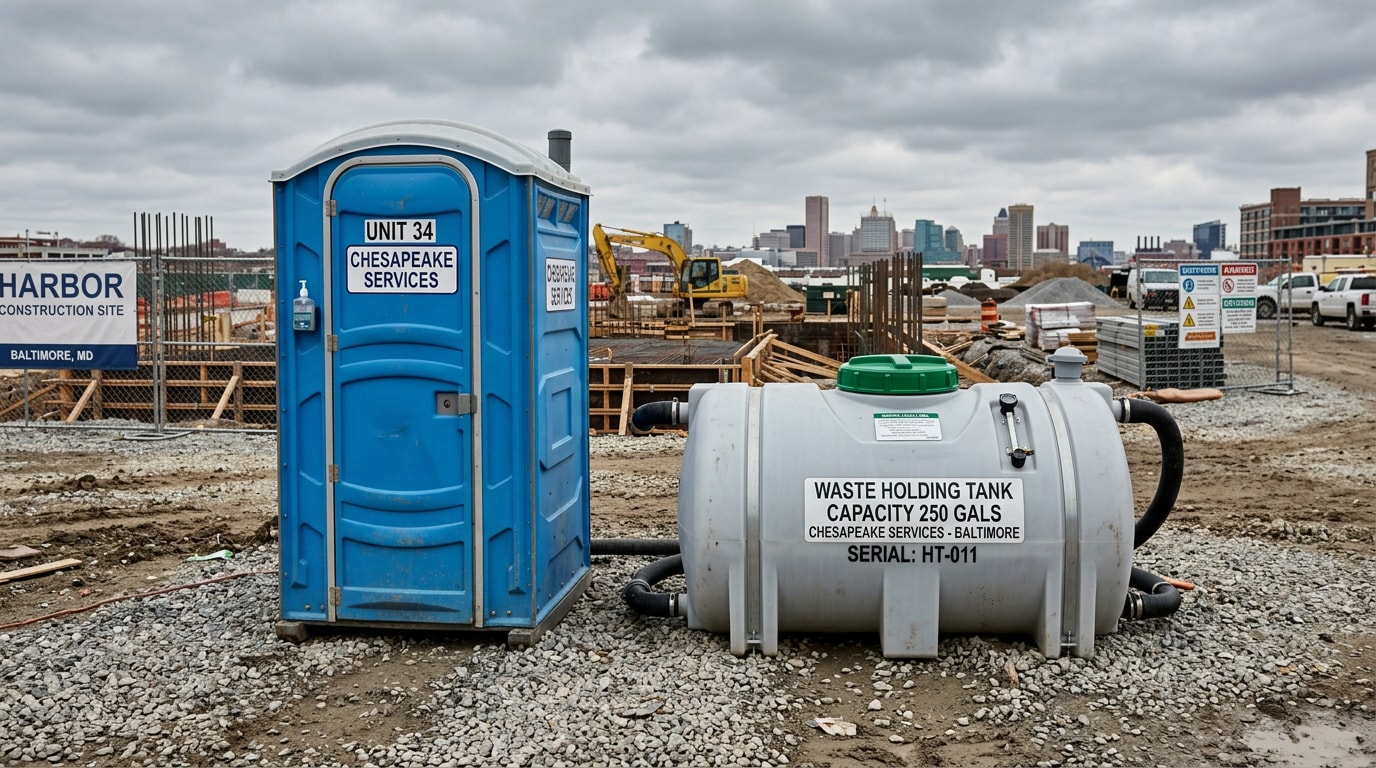
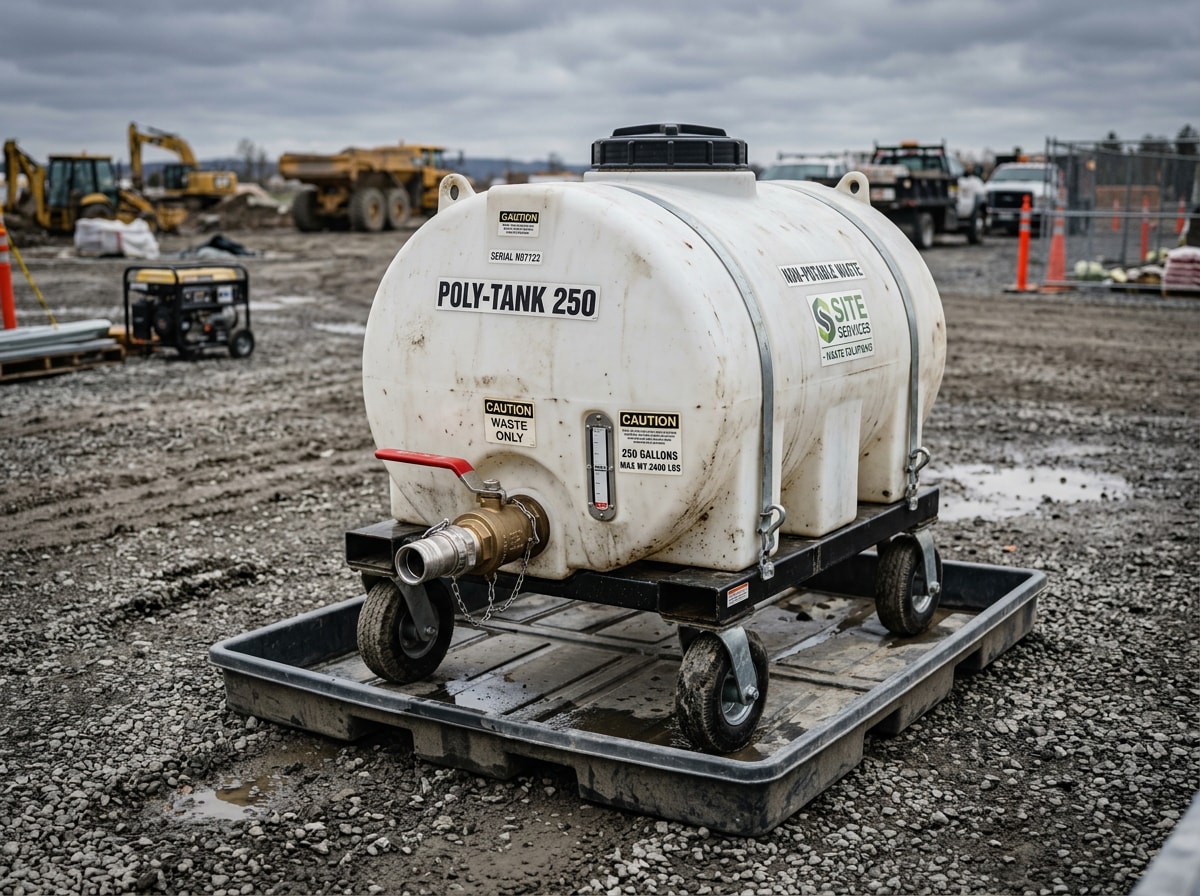
A portable holding tank is a standalone waste storage tank separate from a toilet unit, useful when you need extra capacity without adding more stalls. This is the closest match to true "septic tank rental" for sites generating heavier waste volume.
| Tank Size | Best For | Typical Crew/Group | Approx. Service Interval |
|---|---|---|---|
| 60-gallon (standard built-in) | Single crew member, short events | 1-3 people | Every 7-10 days |
| 150-gallon | Shorter events, smaller headcounts, tighter site access | 5-10 people | Every 3-4 days |
| 250-gallon | Larger crews, multi-day events | 10-15 people | Every 4-5 days |
A containment tray sits underneath a holding tank to catch drips or leaks before they reach the ground. This small add-on matters for spill protection, particularly on sites near storm drains or waterways where even minor runoff can trigger reporting obligations.
Servicing Schedule: How Often Does It Need Pumping?
How often a unit needs pumping comes down to tank size divided by daily waste volume, not a flat calendar rule. A single worker on a 60-gallon tank can often go 7-10 days before servicing, while a five-person crew on the same unit needs a pump-out roughly every two days.
Scale that up: a 150-gallon tank serving a 10-person crew lands around a 3-day servicing schedule, and a 250-gallon tank under the same crew size stretches closer to 5 days. Large single-day events compress this dramatically. A festival with 500 attendees on shared units may need mid-day servicing regardless of tank capacity, simply because usage concentrates into a few hours rather than spreading across a week.
In practice, when a Cathy's Cans dispatch call swaps a 150-gallon tank for a 250-gallon tank mid-project, it's almost always because a crew grew past five or six workers, not because the original size was a bad call. Building in a buffer before the tank hits full capacity is worth the extra service trip, since county and state health guidance generally favors servicing ahead of overflow rather than waiting for warning signs.
Where Units Get Placed
Standard single-stall units handle most settings well, but placement and ratio shift depending on the job.
Construction sites. Active job sites need durable, long-term placement near the work zone, not tucked out of reach. Federal workplace rules set minimum toilet ratios by crew size: one toilet for 20 or fewer employees, one toilet seat and one urinal per 40 workers for crews between 20 and 200, and one seat and urinal per 50 workers above that. Toilets shall be provided for employees according to the following table: 20 or less, 1; 20 or more, 1 toilet seat and 1 urinal per 40 workers; 200 or more, 1 toilet seat and 1 urinal per 50 workers. That's why job site sanitation planning is a standard line item on most bids, not an afterthought.
Backyard parties. Placement on a flat, accessible part of the lot matters more than size for most home events. One standard unit comfortably covers up to about 75-100 guests over a single afternoon.
Festivals and markets. High-traffic public events need multiple units deployed in clusters, sized roughly one unit per 50-75 attendees for all-day programming, with more frequent servicing than a typical job site since usage concentrates into just a few hours.
Agricultural sites. Farm and field crews need units placed where delivery trucks can actually reach, gravel pads or compacted field edges work better than soft, uneven ground. Seasonal and long-term agreements are common here since crew sizes shift with harvest timing.
Permits & Compliance in Baltimore
Placement on a public street or sidewalk is a use of the public right-of-way and usually requires a city permit, while private-property placement doesn't. Baltimore City publishes fees for temporary right-of-way use by category: sidewalk closures, curb lane closures, and street closures are each billed on a weekly basis. Temporary Use of the Right of Way fees include Sidewalk Closure at $55.00/week, Street Closure at $85.00/week, Curb Lane Closure at $65.00/week, and Alley Closure at $65.00/week. Confirm with your rental provider whether your delivery spot triggers one of these before the unit shows up.
For construction sites, the OSHA ratios above apply regardless of county, and units that are out of service or unsanitary don't count toward the minimum. Review the official OSHA sanitation standard for the full regulatory text before finalizing crew-size calculations on a bid.
If your project spans beyond Baltimore City into Howard County, Anne Arundel County, or Harford County, the same unit types and sizing logic apply, though permit rules vary by jurisdiction.
Choosing a Reliable Rental Vendor
A reliable provider confirms delivery windows in writing, answers servicing calls same-day, and sends units that are actually clean on arrival, not just "available." Before booking, ask:
- How they handle a missed delivery
- What their rush-servicing response time looks like
- Whether units are inspected between rentals
These questions reveal more than a glossy brochure ever will. Browse our waste management services to see the full range of units available, or request a free estimate directly for your Baltimore address and dates.
For a closer look at what rentals typically run in this market, see our breakdown of porta potty rental costs in Baltimore, MD.
FAQ
How much is it to rent a porta potty in Maryland?
Cost varies by duration, unit type, and servicing frequency. Short single-weekend rentals cost less than multi-week construction placements, and adding a handwash station or upgrading to a restroom trailer raises the total. Request a quote with your dates and unit count for an exact number.
What's the difference between a portable toilet and a portable holding tank?
A portable toilet is a complete stall with a built-in waste tank, typically 60 gallons. A portable holding tank is a standalone storage unit added alongside existing toilets to extend capacity without adding more stalls, usually in 150- or 250-gallon sizes.
Do I need a right-of-way permit in Baltimore?
Only if the unit sits on a public street, sidewalk, or curb lane. Private-property placement doesn't require one. Confirm the exact spot with your provider before delivery day so a permit, if needed, is in hand.
What is the delivery timeline if I need a unit immediately?
Standard requests usually need a few business days' notice. Same-day or rush delivery is often possible for an added fee, depending on route availability on the day you call.
Can I extend the rental?
Most providers allow an extension with advance notice, prorating the additional days onto your original invoice rather than charging a brand-new setup fee.
Do restroom trailers need a water hookup?
It depends on the model. Some trailers are self-contained with onboard freshwater tanks; others need a hookup. Confirm your site's available utilities against the trailer model before booking, or ask about a self-contained option if hookups aren't available.
Start from our homepage to compare unit types, or browse recent projects to see completed Baltimore-area rentals before you book.