A trash compactor rental in Anne Arundel County, MD gives retail stores, restaurants, grocery stores, and multi-family properties a way to manage high-volume waste without constant pickups. Compaction cuts hauling costs, keeps loading areas cleaner, and frees up lot space that oversized open dumpsters would otherwise eat up. This guide breaks down the three main compactor types, what they cost to run, and the local disposal rules that affect how your equipment gets serviced.
Visit Cathy's Cans, LLC to see our services and request a free estimate.
Which Commercial Compactor Is Right for Your Business?
The right compactor comes down to two factors: the type of waste you generate and how much space you have on-site. Dry waste calls for different equipment than wet waste, and available yard space narrows the choice further.
| Compactor Type | Typical Size | Best For | Waste Type |
|---|---|---|---|
| Stationary | 2 yards (paired with a 30-40 yard dumpster) | Retail, warehouses | Dry: cardboard, paper, plastic |
| Self-contained | 30-34 yards | Grocery stores, restaurants, hospitals | Wet: food scraps, liquids |
| Vertical | 3-8 yards | Fast-food, convenience stores, tight lots | Mixed wet/dry, low volume |
Stationary Compactor
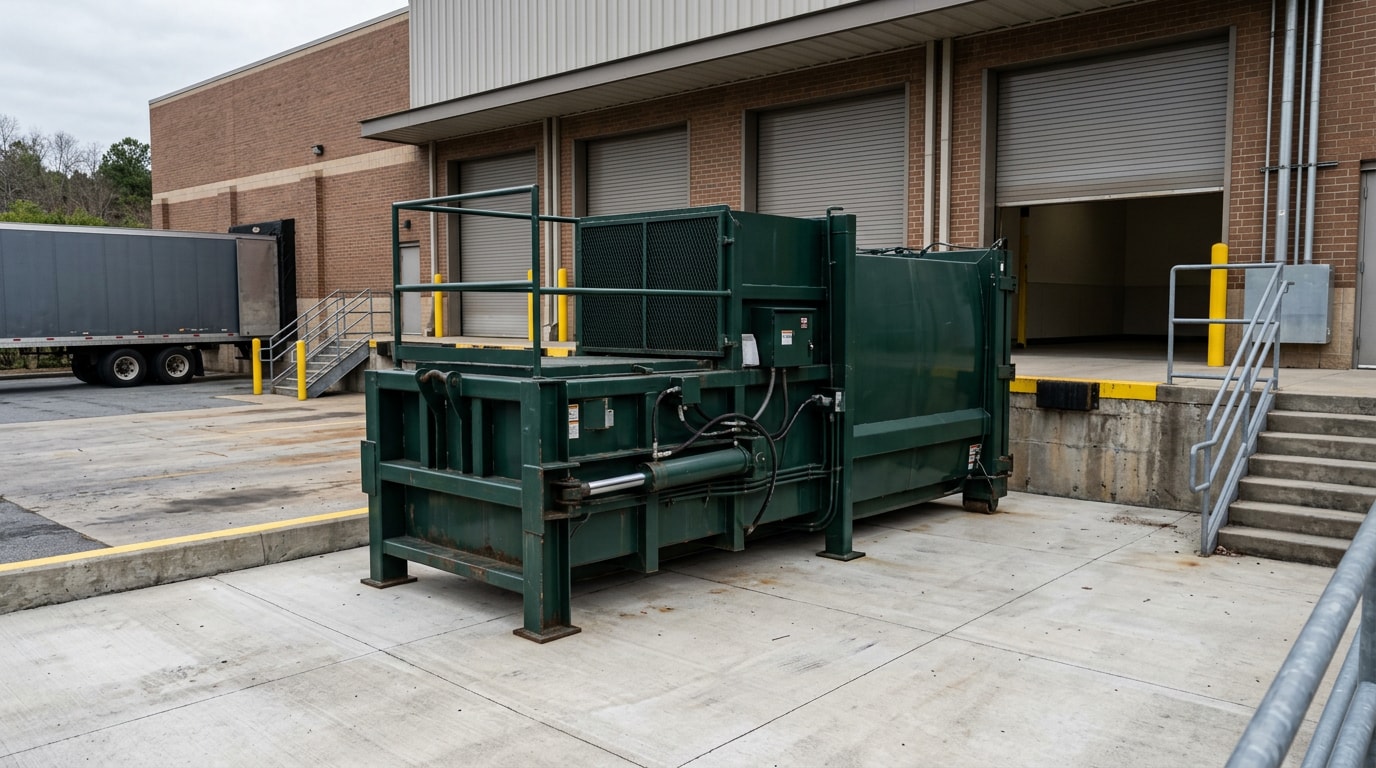
A stationary compactor typically runs around a 2-yard unit paired with a separate 30- to 40-yard dumpster, and it's ideal for retail, department stores and warehouses handling dry waste such as paper, cardboard, and plastic . The compactor stays bolted to the pad, and the hauler swaps the attached container once it's full.
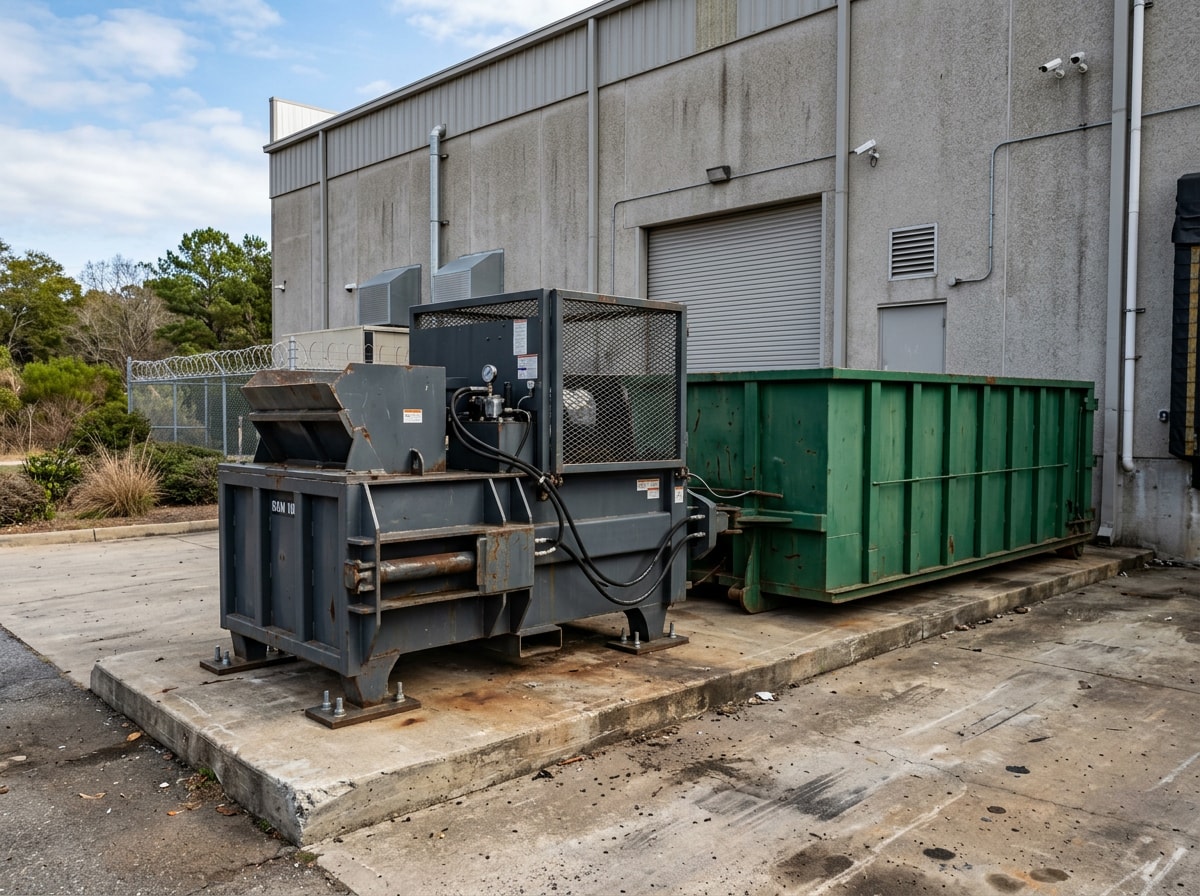
Self-Contained Compactor
Wet waste such as food scraps or anything with liquid needs a sealed, leak-tight self-contained unit where the compactor and container are one welded body that gets hauled away together, which is why grocery stores, restaurants, hospitals, and hotels rely on this type . These units typically come in 30-, 34-, and 35-yard sizes , which keeps odor and runoff contained on-site instead of leaking across a loading dock.
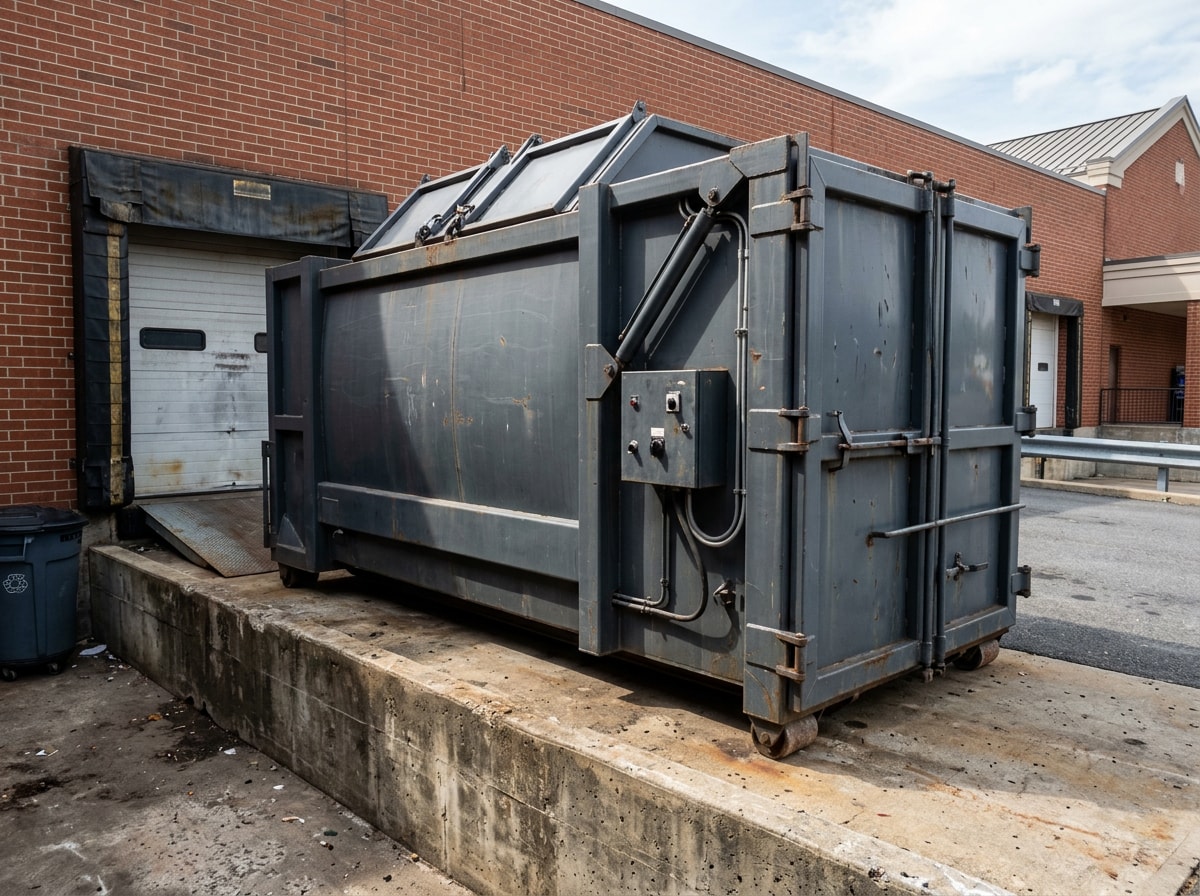
Vertical Compactor
A vertical compactor usually runs 3 to 8 yards and fits lower-volume businesses where space is tight, such as a fast-food restaurant . If your waste volume doesn't justify a full-size unit yet, a commercial dumpster rental may be the simpler and cheaper fit until volume grows.
Why Businesses Switch to Compactor Rental
Three reasons drive most of the switch from open dumpsters to compaction:
- Lower hauling costs. Compacting waste before pickup means fewer hauls, which directly lowers the fees tied to the rental. Restaurants, grocery stores, retail centers, and multi-family properties with heavy volume typically see the biggest drop in pickup frequency.
- Cleaner, safer loading areas. An enclosed compactor keeps waste sealed away from pests, weather, and foot traffic, unlike an open dumpster that invites rodents and odor. That containment also cuts down on loose debris near delivery areas where staff and trucks move all day.
- Reclaimed lot space. Compaction shrinks the footprint needed for waste storage, often replacing several open dumpsters with one unit, which matters on the tight retail lots common around Annapolis and Glen Burnie.
In our experience fitting compactors for Anne Arundel County grocery and retail accounts, the switch from multiple weekly open-top pickups to a single compacted haul usually happens within the first month once volume crosses that threshold.
Is a Compactor Right for Your Business?
A compactor is likely the right fit if your business generates high waste volume, needs waste secured in an enclosed container, or faces pickup schedules that can't keep pace with daily output. An Annapolis restaurant producing nightly food waste has different needs than a Glen Burnie retail strip generating mostly cardboard, but both benefit once pickups are needed multiple times a week. Request a free estimate and we'll walk through your waste stream before recommending equipment.
Anne Arundel County Disposal Costs & Rules
Local rules affect how a compactor gets serviced once it's full, not just how it's loaded. A few things specific to the county are worth knowing before you sign a rental agreement:
Solid waste delivered by a commercial business to a County facility is charged at $100 per ton , so compaction that reduces the number of hauls has a direct, measurable payoff here.
The Millersville Landfill and Resource Recovery Facility is the only operating municipal solid waste disposal facility in the County , which is where most compacted commercial loads ultimately end up.
Businesses in Anne Arundel County may only bring paper, plastic, metal, and glass recyclables to a County recycling center free of charge; trash and yard waste from a business are not permitted there , which is one more reason recyclables should be sorted out of the compactor stream rather than mixed in.
For a closer look at what's accepted at County drop-off sites versus what needs a hauler, see our guide on the refuse center near me in Anne Arundel County.
How Compactor Rental Works
Trash compactors run on a repeatable cycle: waste loads into the chamber, then a hydraulic ram compresses it against the container wall. Fill-level sensors or staff checks signal when it's time to schedule a haul.
The cycle differs slightly by equipment type. A stationary compactor pushes waste into a separate, detachable container, while a self-contained unit compacts directly into its own sealed body. OSHA applies the machine safeguarding requirements of its General Industry Standard, 29 CFR 1910.212, to balers, compactors, and garbage trucks used for handling refuse , and employers should build specific procedures and precautions into daily operations, including the use of safety devices, for anyone working with balers or compactors . Staff who load the unit should be trained on lockout/tagout steps before ever clearing a jam.
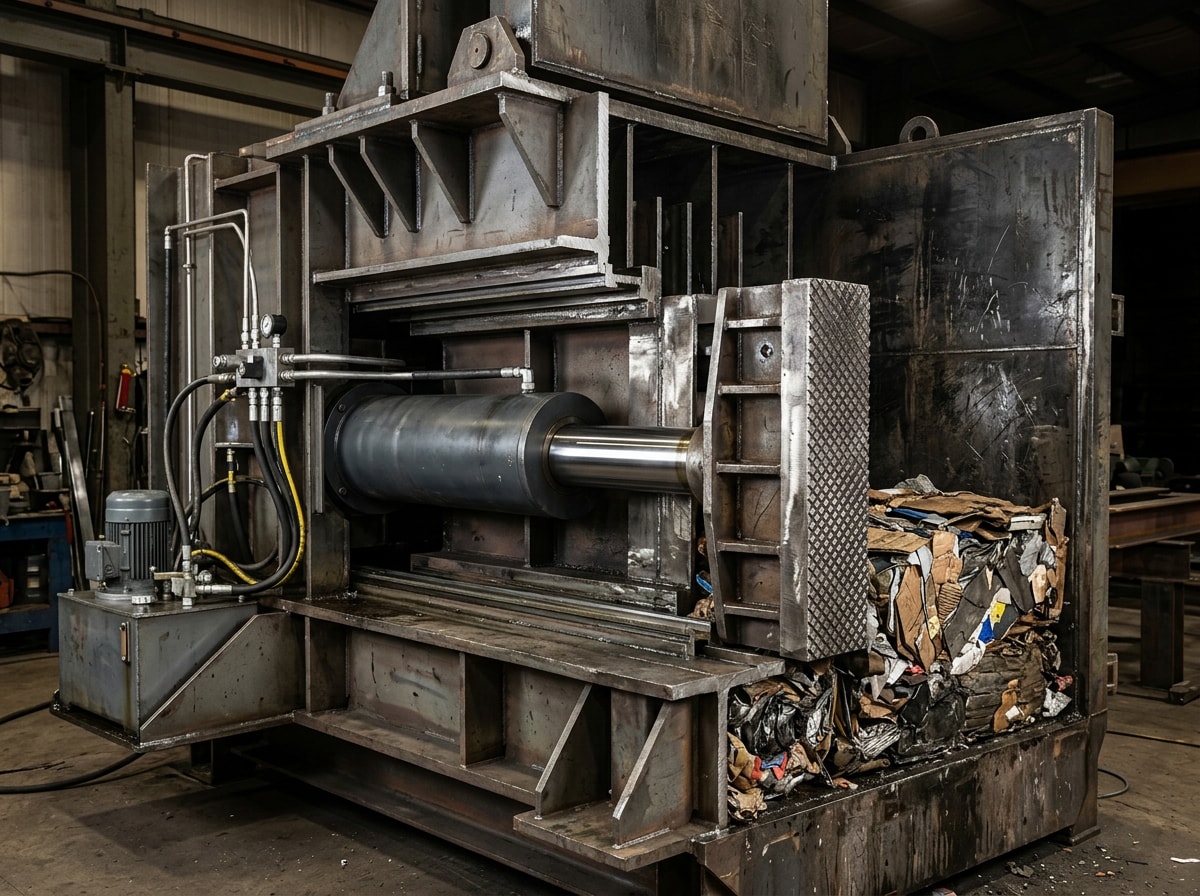
What Not to Load
Knowing what belongs in a compactor, and what doesn't, keeps the equipment running and avoids blocked chambers or jammed rams that delay pickup.
- Batteries and electronics.
EPA recommends that businesses manage lithium-ion batteries under the federal "universal waste" regulations in 40 CFR Part 273 rather than tossing them into general trash compaction.
- Refrigerants and flammable liquids. These can damage the hydraulic ram or create fire and chemical-exposure hazards.
- Recyclables. Cardboard and clean plastics often belong in a separate recycling stream rather than general waste compaction. See our breakdown of what can go in a dumpster in Anne Arundel County for more on sorting rules.
Overloading a unit or loading the wrong materials is one of the most common causes of service delays and repair calls we see on compactor accounts.
Get a Free Compactor Rental Quote
Whether you're outgrowing an open dumpster or just comparing stationary, self-contained, and vertical options, our team services compactor and dumpster accounts across Anne Arundel County and the surrounding region. Browse our full waste management services or see examples of completed equipment setups on our projects page. Visit {{SITE_URL}}/ to learn more about our full service area, or get a free estimate today.
FAQ
What is a commercial compactor?
A commercial compactor is a waste container that uses hydraulic pressure to compress trash into a smaller volume, unlike a standard dumpster that simply stores loose waste until pickup.
What are the benefits of a trash compactor rental?
Lower hauling costs, less lot space used, and a cleaner, pest-resistant loading area are the main benefits, which is worth weighing against standard dumpster pickup once your business generates high-volume waste.
How do I know which type of commercial compactor I need?
It depends mainly on your waste (wet or dry) and how much space you have available. Compare the stationary, self-contained, and vertical options above to match your volume and site constraints.
Can I rent a commercial compactor for my business?
Yes, renting is the standard option for most businesses. Eligibility typically depends on available space, a stable pad, and electrical access, so confirm those details for your specific location before setup.
How much does a trash compactor rental cost in Anne Arundel County?
Cost depends on compactor type, size, and how often it needs hauling. Stationary units cost less to run than self-contained wet-waste units because the receiver container, not the compactor, gets swapped. Contact us for a quote based on your waste stream.
Do I need a permit to install a compactor on my property?
Most private-property installations don't require a zoning permit, but electrical hookups and pad work should meet local code. Confirm specifics with the county before installation, especially for larger self-contained units that need a stable concrete pad.