School waste management in Howard County, MD runs on two parallel systems: county-run recycling and the Feed The Green Bin composting program, both layered on top of standard trash pickup. HCPSS buildings follow nearly the same sorting rules as county homes, with one exception that trips up a lot of families: cafeteria recycling. This guide covers what actually gets recycled, composted, and landfilled at Howard County schools in 2026, plus the state law now pushing more schools toward composting.
How School Waste Management Works in Howard County, MD
Howard County's Bureau of Environmental Services runs recycling and composting for every HCPSS building, while day-to-day trash and recycling pickup at schools is handled under a separate hauling contract. The Howard County Public School System has partnered with Jenn-Kans Disposal for the pickup of trash and recyclables. From there, materials split into two streams. Recyclables are processed at Waste Management Recycle America in Elkridge and food scraps are processed at the Composting Facility at Alpha Ridge Landfill in Marriottsville.
That shared infrastructure is also why the system isn't perfectly uniform building to building. Some schools have full classroom and cafeteria recycling plus a green bin program; others only have classroom recycling. The difference usually comes down to a 2020 policy change most parents never heard about.
Why Cafeteria Recycling Stopped at Some Howard County Schools
This is the part most county resource pages skip, and it's the single most common source of confusion for parents who remember recycling bins in the lunchroom. Starting with the 2020-21 school year, HCPSS pulled recycling bins from cafeterias system-wide. The trigger was plastic bags.
The county went to the school system's custodial management department, saying if recyclables are placed in plastic bags, they would be considered residue and therefore trash , according to the county's recycling program manager. HCPSS's own spokesman put it simply: "Starting with the 2020 school year, we will no longer recycle in school cafeterias."
The good news: it wasn't a full rollback. Recycling will continue in other parts of schools, just not in cafeterias. Classrooms, offices, and front-of-house areas still run single-stream recycling as normal. If your child's school seems to have "stopped recycling," it's almost always just the cafeteria that changed, not the whole building.
Recycling Collection in Classrooms and Common Areas
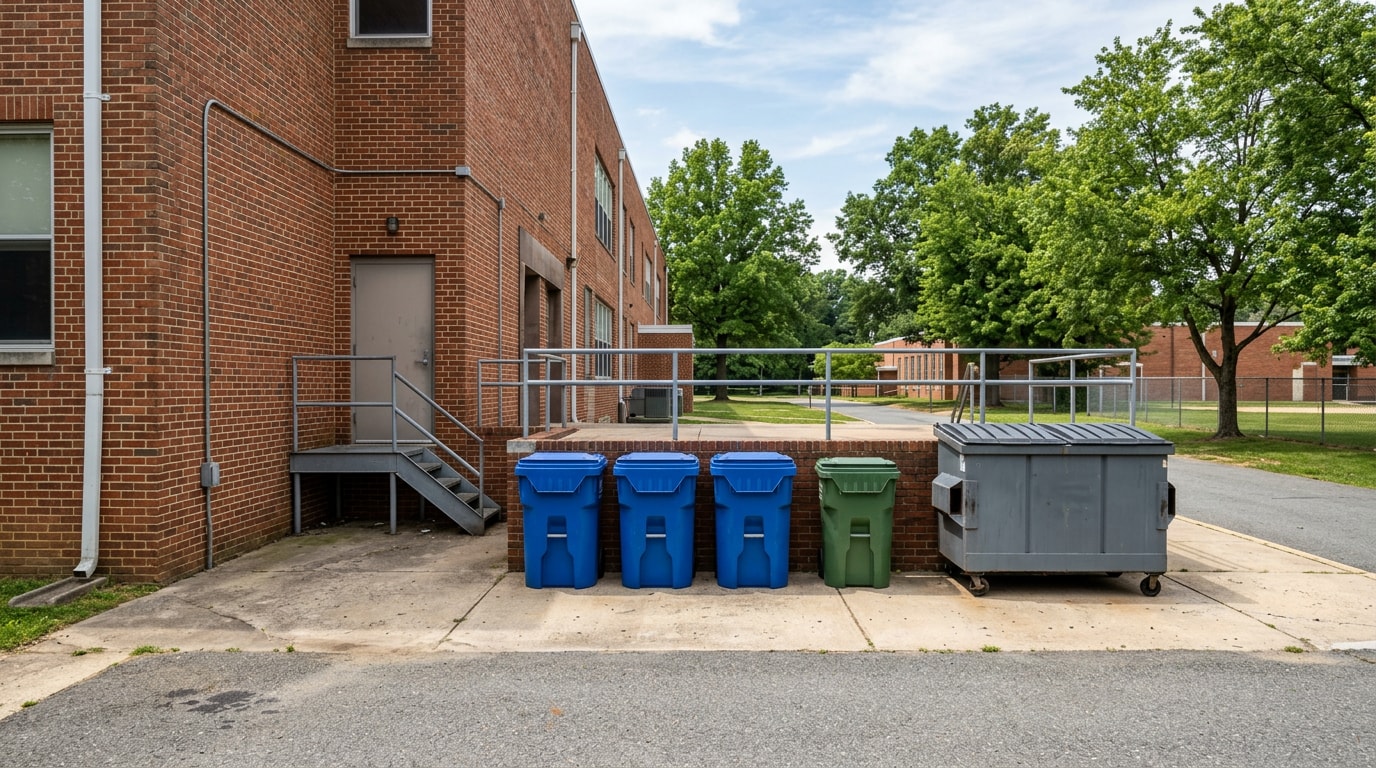
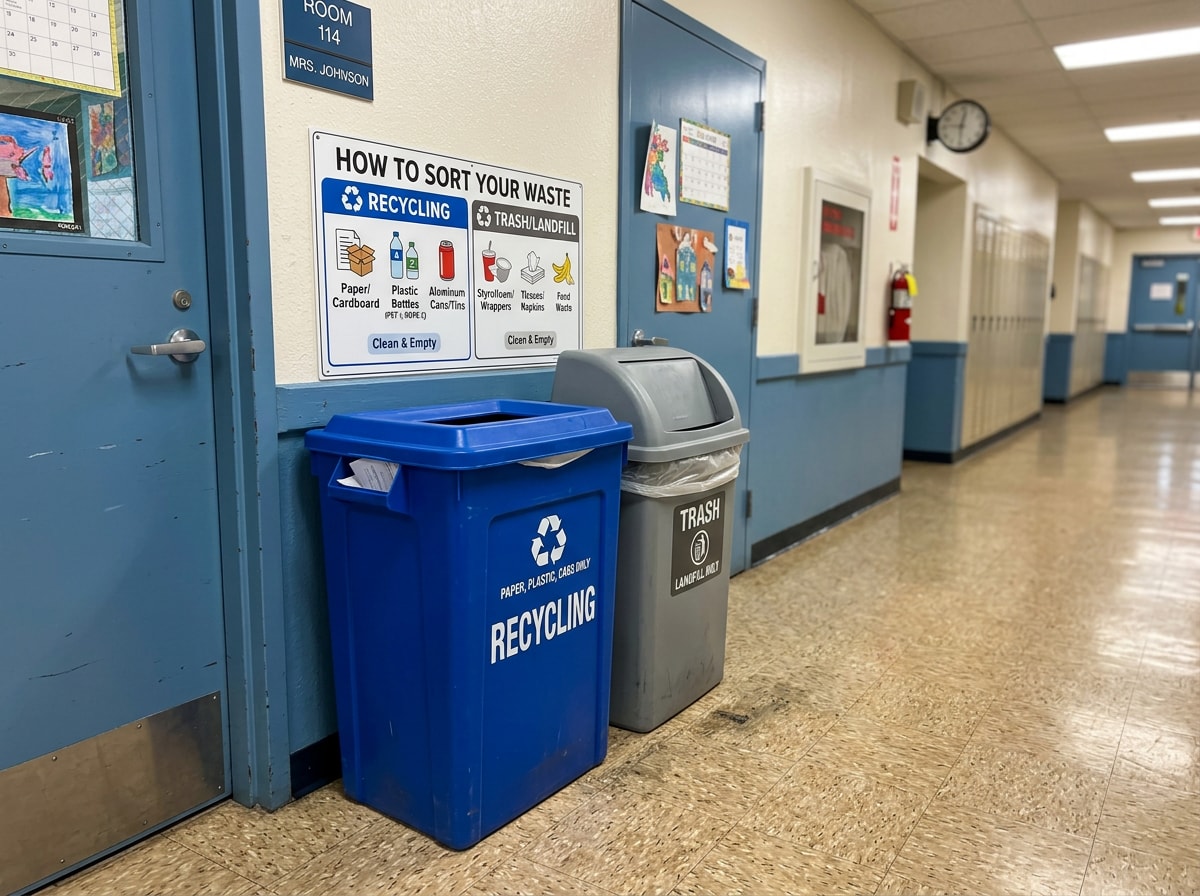
HCPSS offers single stream recycling in the cafeteria and classrooms. Just like at home, items should be clean, empty, dry and free of plastic bags/film before recycling. It's important that only recyclable items are placed in the blue bin.
Accepted in classroom and office recycling:
Books, cardboard and paperboard, folders, milk cartons and juice boxes, notebook paper and office paper, magazines, paper bags (clean), envelopes, shredded paper (if bagged in paper), glass bottles and jars, and rigid plastics.
Not accepted:
Chip bags, candy wrappers, food and drink pouches, plastic bags and film, styrofoam, utensils, straws, and yogurt or applesauce lids.
Prep is simple: containers need to be emptied, but not rinsed. The plastic bag rule isn't arbitrary, either. Plastic bags/film should never be emptied into outdoor recycling toters or dumpsters, because they get wrapped around recycling equipment and jam the screens at the processor, doing real damage to the equipment.
For containers and signage, the county recommends pairing every trash bin with a recycling bin. Signage above trash, recycling and food scrap bins is highly recommended, and participating schools can contact the Recycling Division for additional posters or create their own.
Food Scrap Collection: Feed The Green Bin at School
Howard County's food scrap collection program is available in eligible HCPSS schools, where food scraps, napkins and compostable trays are sorted in the cafeteria, collected, and sent to the Composting Facility at Alpha Ridge. Not every school is on the program yet, so check with your building's custodial office before assuming the green bins exist.
Accepted in the green bin:
Banana peels, apple cores, bread crusts, leftover food and plate scrapings, cheese, candy, egg shells, coffee grounds and tea leaves, and yogurts, along with compostable items like paper lunch trays, napkins and paper towels, coffee filters, tea bags, pizza boxes, popsicle sticks, and cut flowers.
Not accepted:
Liquids, fats and grease, tissues, recyclables, styrofoam, waxed paper, and waxed cardboard.
Containers fit right into existing cafeteria setups. Food scrap collection can be integrated into existing trash and recycling stations within the cafeteria, kitchen prep area and staff lounge, and the Recycling Division provides training, outdoor collection carts, and collection services.
Here's the information most "how composting works" pages leave out: the county now tracks how much this actually diverts. A 2022 waste sort found that researchers sampled trash from across the county's 15 curbside collection zones and found organic material topped the list at over 40% of household trash. That's the same waste stream school cafeterias generate every lunch period. Countywide, in 2025, the County diverted 9,872 tons of food scraps and yard trim through the Green Bin program , with the finished product sold back as HoCoGro compost, mulch, and topsoil blends.
Maryland's School Food Waste Law: Why Composting Isn't Optional Much Longer
This is the piece most local guides, including older versions of this one, miss entirely: Maryland now has a statewide mandate behind this. Under COMAR 26.04.13, the Maryland Department of the Environment's wasted food regulation requires large generators to act. State law requires large food residual generators, including schools, supermarkets, and food processing facilities, to separate and divert food residuals from landfill/incineration if they generate at least one ton of food residuals per week and are located near an organic recycling facility.
Maryland has also put funding behind the push. Chapter 205 of 2022 established a grant program to award grants to county boards of education and public schools to develop and implement programs for reducing food waste and composting pre- and post-consumer waste, and the fiscal 2024 budget included $250,000 in general funds for that grant program.
The environmental case lines up with what Howard County is already doing. According to EPA's sustainable management of food guidance, diverting food scraps from landfills cuts the methane they'd otherwise generate while decomposing. Composting it instead turns that same material into something usable: composting releases less methane than a landfill and converts food scraps into a great fertilizer for new plant growth. For schools weighing whether to apply for a county green bin or petition HCPSS for one, the University of Maryland Extension's research on composting and climate is a solid next read for a PTA sustainability committee.
Presentations, Tours, and Classroom Resources
Schools don't have to figure this out alone. Schools can request recycling presentation and tours from the Bureau of Environmental Services. These sessions cover sorting rules, the Feed The Green Bin process, and often include a look at how materials move through the Elkridge recycling facility or the Alpha Ridge composting site.
If your school is planning a recycling kickoff, a green bin launch event, or an Earth Day cleanup day, those efforts usually generate more bulky waste than curbside bins can absorb in one week. That's a good moment to get a free estimate on a short-term dumpster so the extra volume doesn't sit in a hallway until the next pickup.
Reducing Waste Before It's Created
Diversion only gets a school so far. Howard County's solid waste management plan is built around implementing programs to promote material reduction, reuse, and recycling of residential, government, school, and commercial waste , with source reduction sitting above recycling and composting in priority. Practically, that means reusable supplies, smarter bulk purchasing, and less single-use packaging in the first place.
There's also a student-facing side to this. Open to Howard County third, fourth and fifth graders, the Reduce, Reuse, Recycle contest asks students to draw pictures of how they reduce, reuse and recycle at home or at school, and the top 13 drawings are featured in a coloring book.
When Schools Need More Than Curbside: Dumpsters for Renovations and Events
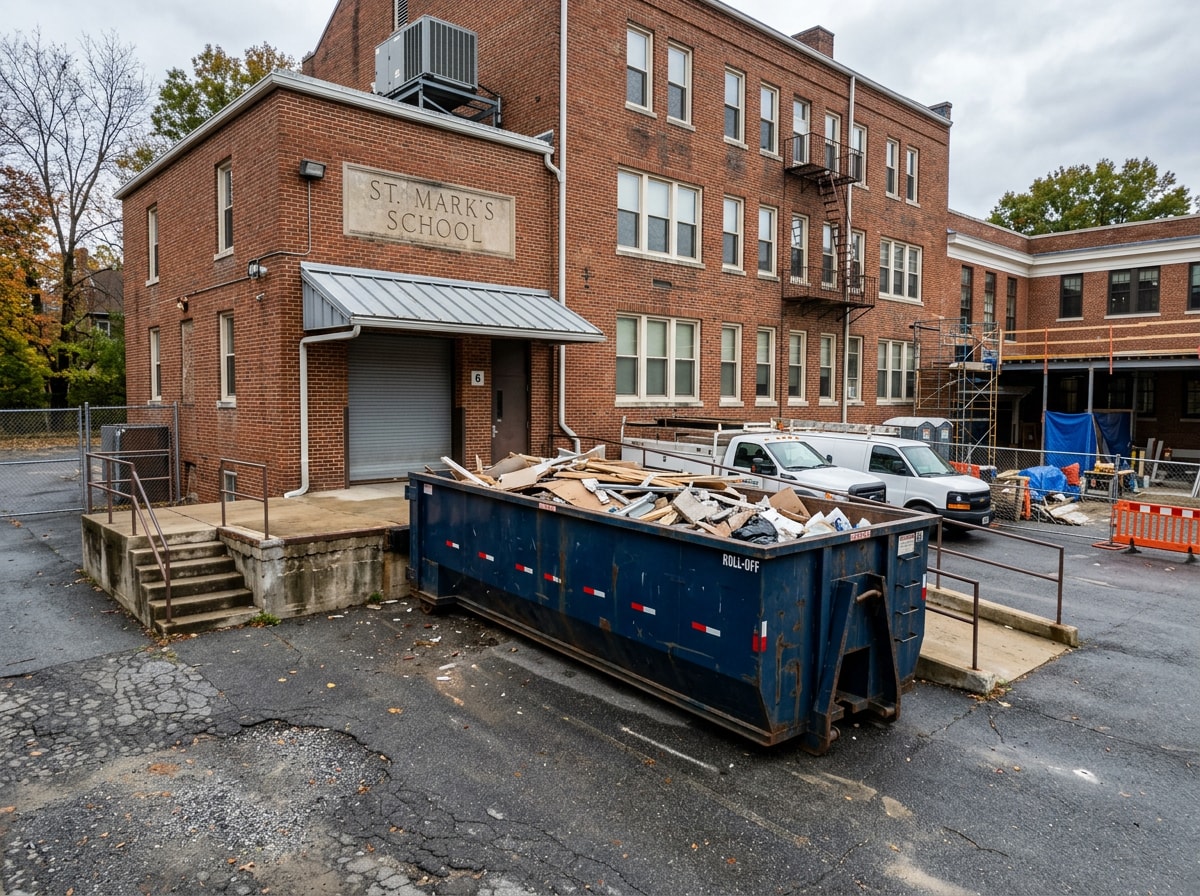
Curbside and the green bin cover day-to-day trash, but they're not built for a cafeteria renovation, a book fair teardown, or a summer classroom purge. We've delivered roll-off containers to school sites in Howard County for exactly these jobs, usually when a facilities team is clearing out decades of stored furniture or a contractor is mid-renovation and county pickup frequency just can't keep pace.
For that kind of volume, a commercial dumpster rental is the more practical option than stacking extra bags curbside. If you're also coordinating a nearby residential cleanout, say a PTA member clearing a garage for a fundraiser, our residential dumpster rental page breaks down sizing for that separately. For a full look at pricing and permits in this market, our Dumpster Rental Howard County, MD guide walks through sizes and typical costs for 2026.
FAQ
Do Howard County schools still recycle in the cafeteria?
Not at most schools. HCPSS pulled cafeteria recycling bins starting the 2020-21 school year because bagged lunch trash was contaminating loads. Recycling continues in other parts of schools, just not in cafeterias. Classroom and office recycling is unaffected.
Why should schools join the Green Bin program?
Joining shrinks trash volume, cuts the greenhouse gases food releases when it decomposes in a landfill, and keeps the finished compost local to Howard County instead of trucking waste further away.
Can schools participate in the Green Bin program?
Yes, but only eligible HCPSS schools currently have it. Food scraps, napkins and compostable trays are sorted in the cafeteria, collected and sent to the Composting Facility at Alpha Ridge Landfill. Check with your school's custodial office to confirm participation.
What happens to recyclables and food scraps after pickup?
Recyclables are processed at Waste Management Recycle America in Elkridge, and food scraps are processed at the Composting Facility at Alpha Ridge Landfill in Marriottsville. Finished compost is sold back to the county as HoCoGro soil products.
What can't go in a Howard County school green bin?
Liquids, fats and grease, tissues, recyclables, styrofoam, waxed paper, and waxed cardboard are not accepted. Mixing these in contaminates the whole batch, similar to how plastic bags contaminate blue bin recycling.
Does Maryland require schools to compost?
For large generators, yes. Schools that generate at least one ton of food residuals per week and sit near an organics recycling facility must divert that material from landfills or incineration under state law. Smaller schools aren't mandated yet, but state grant funding is pushing more districts to opt in voluntarily.
How do teachers request a recycling presentation or tour?
Schools can request recycling presentation and tours from the Bureau of Environmental Services. Reach out through the county's Trash and Recycling Division to schedule a grade-level assembly or a facility visit.
Whether you're managing daily classroom recycling or planning a bigger facilities cleanout, Cathy's Cans serves schools and families throughout Howard County with dumpster options sized for the job. Contact us for a free estimate before your next cleanout, renovation, or donation drive.